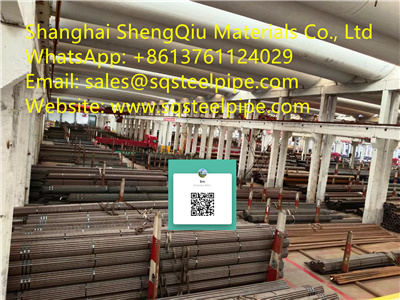
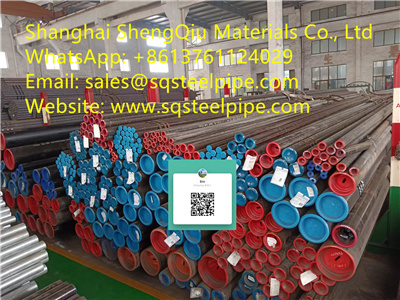
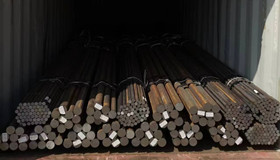
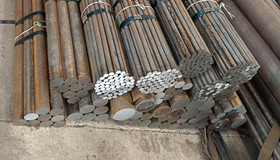
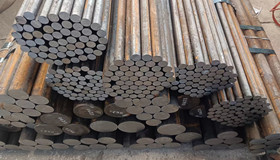
Referred to as pressure and boiler vessel material, steel grade P235GH is well suited for use in elevated temperature applications. Pipes produced under standard EN10216-1 are a part of pressure systems. Hence, these components are able to perform well in both high pressure as well as high temperature applications. Industries such as the oil & gas, chemical and petrochemical industry prefer the use of EN10216-2 pipe dimesions as these sectors have highly demanding operations.
Usually, the conveyance of media across distilleries or refineries calls for high quality produced EN10216-2 P265GH equivalent because they undergo several stresses including viscosity of the media being passed or even the speed of the flow. The EN10216-2 P235GH is a grade that has several designations like the letters P, G and H, all of which provide the characteristic description of the pipe. While the letter P means the pipe is meant for pressure purposes, the letter H indicates it is a hollow section or hollow profile and lastly the letter G suggests general characteristics. The number 235 simply states the minimum yield strength of the EN10216-2 P265GH in N/mm2. These steel grades are available in two qualities TR 1& TR 2. Steel tubes intended for use in ambient temperature settings are referred to as EN10216-2 P235GH TC1 quality. Generally steel pipes belonging to quality TR 1 are a part of systems that are useful to ferry across media.
· P195TR1
· P195TR2
· P235TR1
· P235TR2
· P265TR1
· P265TR2
Chemical Composition of EN 10216-2 Carbon Seamless steel tubes
Steel grade | C | Si | Mn | P | S | Cr b | Mo b | Ni b | Al tot | Cu b c | Nb b | Cr+Cu | |
Steel name | Steel number | max. | max. | max. | Max. | max. | max. | max. | max. | min. | max. | max. | max. b |
P195TR1 | 1.0107 | 0,13 | 0,35 | 0,70 | 0,025 | 0,020 | 0,30 | 0,08 | 0,30 | - | 0,30 | 0,010 | 0,70 |
P195TR2 | 1.0108 | 0,13 | 0,35 | 0,70 | 0,025 | 0,020 | 0,30 | 0,08 | 0,30 | 0,02 d | 0,30 | 0,010 | 0,70 |
P235TR1 | 1.0254 | 0,16 | 0,35 | 1,20 | 0,025 | 0,020 | 0,30 | 0,08 | 0,30 | - | 0,30 | 0,010 | 0,70 |
P235TR2 | 1.0255 | 0,16 | 0,35 | 1,20 | 0,025 | 0,020 | 0,30 | 0,08 | 0,30 | 0,02 d | 0,30 | 0,010 | 0,70 |
P265TR1 | 1.0258 | 0,20 | 0,40 | 1,40 | 0,025 | 0,020 | 0,30 | 0,08 | 0,30 | - | 0,30 | 0,010 | 0,70 |
P265TR2 | 1.0259 | 0,20 | 0,40 | 1,40 | 0,025 | 0,020 | 0,30 | 0,08 | 0,30 | 0,02 d | 0,30 | 0,010 | 0,70 |
Steel grade | Tensile properties | Impact properties | ||||||||
Steel name | Steel number | Upper yield strength ReH b min. for Wall Thickness T mm | Tensile Strength Rm | Elongation A min. % | Minimum average absorbed energy KV J at a temperature of °C c | |||||
T =16 | 16 < T =40 | 40 < T =60 | l | t | ||||||
Mpa | Mpa | Mpa | Mpa | l | t | 0 | -10 | 0 | ||
P195TR1 e | 1.0107 | 195 | 185 | 175 | 320 to 440 | 27 | 25 | - | - | - |
P195TR2 | 1.0108 | 195 | 185 | 175 | 320 to 440 | 27 | 25 | 40 | 28 d | 27 |
P235TR1 e | 1.0254 | 235 | 225 | 215 | 360 to 500 | 25 | 23 | - | - | - |
P235TR2 | 1.0255 | 235 | 225 | 215 | 360 to 500 | 25 | 23 | 40 | 28 d | 27 |
P265TR1 e | 1.0258 | 265 | 255 | 245 | 410 to 570 | 21 | 19 | - | - | - |
P265TR2 | 1.0259 | 265 | 255 | 245 | 410 to 570 | 21 | 19 | 40 | 28 d | 27 |
EN 10216-2 P235gh Pipe Equivalent
Equivalent Standards: DIN 17175, BS 3059, ASTM A213, ASME SA213, ASTM A335, NF A 49-213, ASTM A209, JIS G3462, JIS G3458
Equivalent Materials: 15Mo3, 243, TU 15 D 3, 15MoG, 20MoG, SA209T1, SA209T1a, P1, STBA12, STBA13, STPA12, C-0.5Mo
Dimension Chart of EN10216-2 Steel pipe
EN 10216-2 Outside diameter and wall thickness tolerances | |||||
Outside diameter D mm | Permissible deviations | Permissible deviations of wall thickness | |||
≤0.025 | >0.025 | >0.050 | >0.10 | ||
D≤219,1 | +\- 1% or =\- 0.5mm depending on which is greater | +\- 12,5% or 0.4 mm depending on which is greater | |||
D>219,1 | =\- 20% | =\- 15% | =\- 12,5% | =\- 10% | |
Inspection and test type | Test frequency | Test category | ||
Mandatory tests | Ladle analysis | One per ladle | 1 | 2 |
Tensile testing in room temperature | One per every test pipe | X | X | |
Flattening test for D<600mm and the ratio of D≤0.15 but T≤40mm or ring testing for D>150mm and T ≤40mm | X | X | ||
Rolling test on a mandrel bar for D≤150mm and T≤10mm or ring testing for D≤114,3mm and T ≤12,5mm | X | X | ||
Resilience testing at the temperature of 20 ºC | X | X | ||
Tightness testing | Every pipe | X | X | |
Dimensional testing | X | X | ||
Visual inspection | X | X | ||
NDT in order to identify longitudinal discontinuity | Every pipe | X | X | |
Material identification for alloy steel | X | X | ||
Optional tests | Final product analysis | One per ladle | X | X |
Tensile testing at elevated temperature | One per ladle and for the same thermal processing conditions | X | X | |
Resilience testing | One per every test pipe | X | X | |
Resilience testing in the machine direction at the temperature of -10ºC for non-alloy steel grades | X | X | ||
Wall thickness measurement at a distance from pipe ends | X | X | ||
NDT in order to identify transverse discontinuity |
| X | X | |
NDT in order to identify delamination | X | X | ||